It’s World Cancer Day. Did you know these stats?
Prostate cancer is one of the most common cancers affecting men in Australia – but not all men face the same chance of surviving it.
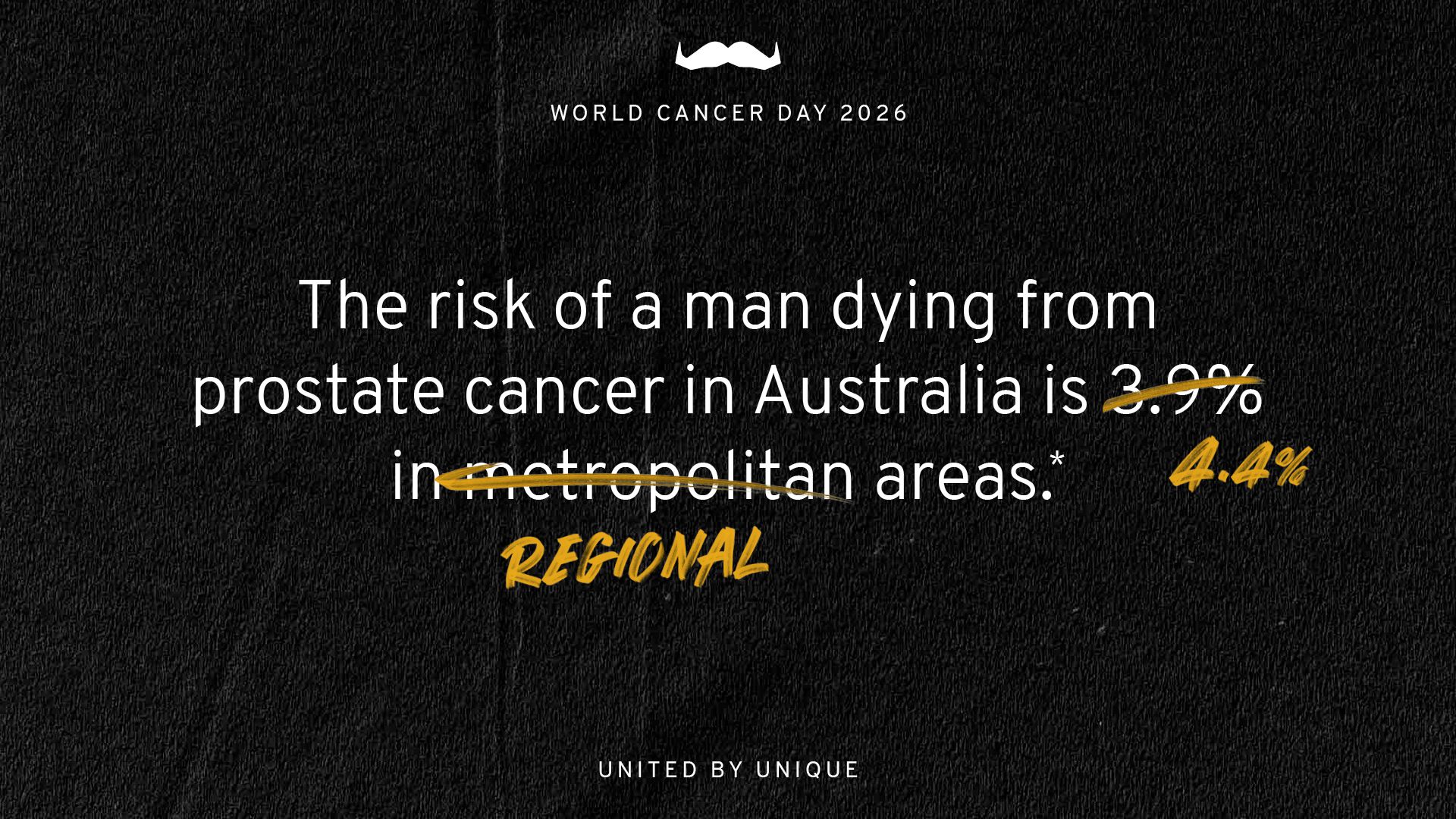
In metropolitan areas, the risk of dying from prostate cancer is 3.9%. In regional areas, that risk rises to 4.4%*.
That difference may seem small, but it represents a real and persistent gap in outcomes. For men living in regional and remote communities, distance, access to services and fewer specialist options can all mean later diagnoses and fewer treatment choices. Simply put, where you live can significantly influence your prostate cancer journey.
For Movember, that reality demands action.
Prostate cancer has been a focus of our work since 2004, and many in our global community have been personally impacted – as patients, partners, family members and friends. This World Cancer Day, we’re shining a light on the inequities that still exist, and the work underway to change them.
Here’s what we’re doing about it
Movember is investing in research, innovation and partnerships that aim to improve prostate cancer outcomes for all men – no matter their postcode.
A key part of this work is our partnership with the Royal Flying Doctor Service (RFDS), which is leading an important study focused on understanding and improving prostate cancer outcomes for men living in rural and remote Australia.
Working alongside experts in prostate cancer epidemiology, biostatistics, machine learning, qualitative research and urology, the RFDS-led study takes a multi-faceted approach to understanding why geographic disparities exist. This includes examining access to testing and diagnosis, treatment pathways, follow-up care and the lived experiences of men navigating the health system outside major cities.
By identifying the drivers behind these gaps, the research aims to inform more equitable, personalised and effective approaches to prostate cancer care – bringing better outcomes closer to home.
Work like this is made possible by you
Every conversation started, every moustache grown and every dollar donated helps fund research like this – research that saves lives and reduces inequity.
This World Cancer Day, we encourage men to talk to their doctor, understand their risk and take control of their health.
Because where a man lives shouldn’t determine whether he survives prostate cancer.
And together, we can change that.